

How often are you physically in one place while your mind is somewhere else?
You may be walking outside while thinking about the email you need to answer. Sitting on the porch while mentally working through tomorrow’s schedule. Driving past trees beginning to change color without really seeing them because you are already thinking three steps ahead.
Our minds are very good at taking us somewhere other than where we actually are.
Sometimes we are replaying what happened yesterday. Sometimes we are anticipating what might happen tomorrow. And sometimes we are simply moving so quickly through our days that we barely notice what is happening around us.
One of the simplest ways to bring ourselves back to the present is also one of the most accessible. Step outside.
Nature Gives Us Something to Notice
Being present does not require an hour of meditation or a perfectly quiet mind. Sometimes it starts with noticing what is right in front of you.
The warmth of the sun. The sound of birds. The movement of leaves in the wind. The texture of tree bark. The smell of rain. The colors beginning to change as one season slowly becomes another.
Nature gives our attention somewhere to go.
When we intentionally notice what we are seeing, hearing, smelling, touching, and experiencing, our attention shifts away from everything competing for space in our minds and toward what is happening right now.
That is mindfulness in one of its simplest forms. You do not have to stop thinking. You do not have to empty your mind. You are simply practicing coming back to the moment you are actually living.
We Do Not Always Notice How Much We Are Missing
Most of us spend a significant amount of our lives thinking about what comes next. What is the next appointment? What needs to get done? Who needs something from me? What is happening tomorrow? What did I forget?
Planning is necessary. Responsibilities are real. But when our attention is constantly focused on what is next, we can unintentionally rush through what is happening now.
Nature offers a gentle interruption.
A beautiful sunset does not care about your to-do list. A hummingbird does not wait until your schedule clears. The first cool morning of fall arrives whether you have finished everything you planned to accomplish during the summer or not.
These moments invite us to pay attention. The question is whether we are present enough to notice them.
Nature Has Its Own Pace
There is another lesson waiting for us outside: nature does not operate at the pace many of us expect from ourselves.
Amy Heard, PhD, is a clinical psychologist who has spent more than 25 years helping people with medical issues learn strategies to heal, cope, and build meaningful lives. After moving from the suburbs of Vienna to the woods of Loudoun County, she became increasingly interested in the connection between nature and wellbeing, both through emerging research and her own experience.
One of those lessons is the rhythm of seasons. Summer is filled with growth and abundance. Flowers bloom. Gardens become full. Trees leaf out. Fruits and vegetables slowly ripen. And then things begin to change.
As we move toward fall, nature does not try to hold onto summer. The days gradually shorten. Temperatures begin to shift. Leaves change. Plants that spent months growing begin another part of their cycle.
There is something reassuring about remembering that not every season is meant for constant growth. We have seasons too.
There are times for doing and times for resting. Times for stretching ourselves and times for pulling back. Times when life feels abundant and times when our energy needs to be conserved.
Being mindful helps us notice which season we are actually in instead of constantly expecting ourselves to be somewhere else.
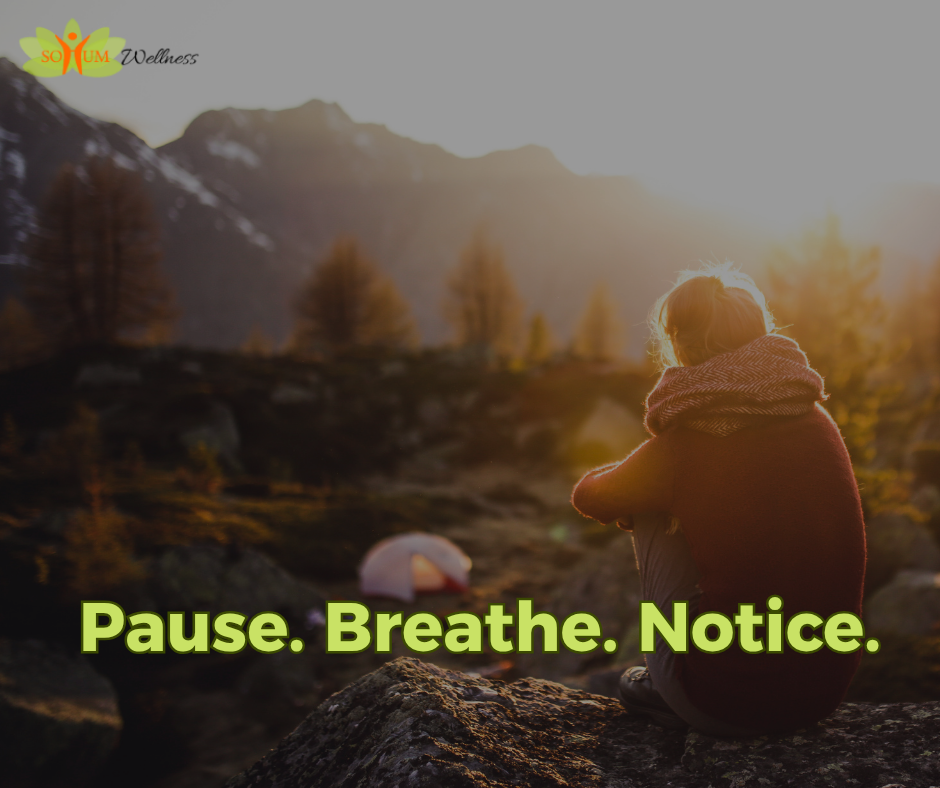
You Do Not Have to Go Into the Woods
Connecting with nature can sound like another wellness activity we need to schedule. It does not have to be.
You do not need to hike a mountain, spend a weekend camping, or even travel to a park.
Dr. Heard encourages people to incorporate mindful awareness of nature into things they are already doing. You can notice what is around you while walking the dog, working in the garden, sitting on your deck, walking across a parking lot, or looking through a window.
The practice is not necessarily about where you are. It is about how much attention you are giving to where you are.
Try a Five Senses Walk
One of Dr. Heard’s suggested practices is a Five Senses Walk. The next time you are outside, intentionally notice what each of your senses can tell you.
What do you see? What can you hear? What do you smell? What textures can you feel? Depending on where you are, is there anything you can safely taste?
Do not rush through the questions as though you are completing a checklist. Give yourself time to become curious.
You might notice the roughness of bark, the softness of moss, the sound of insects you normally tune out, or colors in a flower you have walked past dozens of times without really seeing.
If you take the same walk regularly, you can also begin noticing what changes. Something new blooms. Something else fades. Leaves begin changing. Birds appear or disappear. The light looks different.
The familiar becomes interesting again when we actually pay attention to it.
Find a Place to Simply Sit
Another practice Dr. Heard recommends is sometimes called a sit spot.
Find somewhere comfortable outside and stay there for five or ten minutes, or longer if you would like. Then simply notice.
Let your body settle. Allow your breathing to slow naturally. Look around without needing to accomplish anything.
Maybe your attention is drawn to bees moving among flowers, the pattern in the bark of a tree, clouds moving overhead, the shimmer of water, or a tiny creature going about its day.
The point is not to have a profound experience. The point is to be there for the experience you are having.
Curiosity Can Bring Us Back
One of the things Dr. Heard encourages through her nature practices is curiosity. Curiosity is powerful because it is difficult to be curious about something without paying attention to it.
What is that sound? Why does this leaf look different from the others? Where is that bird going? What has changed since I was here last week?
For a few moments, you are not worrying about tomorrow or replaying yesterday. You are here. And sometimes that is exactly what our minds and bodies need.
You Do Not Need to Be Mindful All Day
Mindfulness can become intimidating when we turn it into another standard we think we are supposed to meet. No one is completely present every minute of every day. That is not the goal.
The practice is noticing when you have gone somewhere else mentally and learning how to come back. Nature gives us countless opportunities to practice.
Step outside. Look up. Notice something you have not noticed before. Stay with it for a moment. Then continue with your day.
Those small moments of presence count.
Explore More in the Fall Wellness Circle
If you have been wanting to slow down, become more present, and create a little more space for yourself, we would love to have you join us in the Sohum Wellness Fall Wellness Circle.
In September, we will welcome Amy Heard, PhD, as a guest speaker for Connecting with Nature. Dr. Heard will share more about what research tells us about nature, healing, and the nervous system, along with simple practices for bringing more mindfulness, curiosity, and connection into everyday life.
The Fall Wellness Circle meets monthly from September through December, with Thursday evening and Saturday morning options.
September: Healthy Communication
Thursday, September 17 at 6:00 PM
Saturday, September 19 at 10:00 AM
Guest Speaker: Dr. Amy Heard, Connecting with Nature
Join us for one gathering or make the Wellness Circle part of your wellbeing practice throughout the fall.
Proudly powered by WordPress
Recent Comments